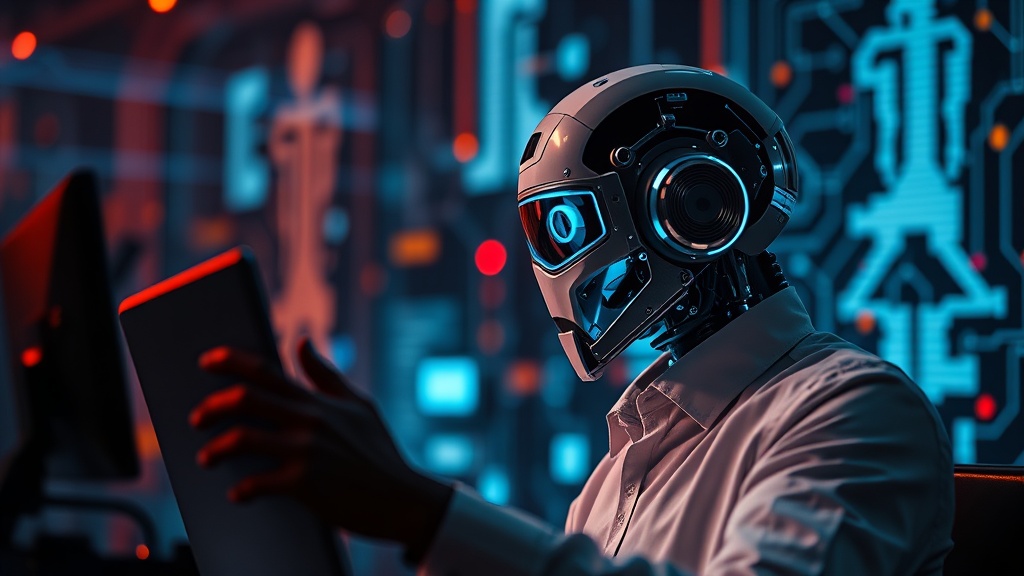
Why Your High-Value Skills Are Losing Value in the AI Era

Recent data from the World Economic Forum suggests that nearly 44% of workers' skills will be disrupted by 2027. This isn't just a minor shift; it is a fundamental restructuring of what it means to be a professional. While many people focus on learning specific software or coding languages, the real danger lies in relying on skills that are easily automated. If your value is tied to a repeatable process, you are effectively a sitting duck for the next wave of automation. This post looks at why traditional expertise is failing and how to pivot toward roles that machines can't replicate.
What is a non-automatable skill?
An automatable skill is something that can be codified into a set of instructions—think data entry, basic copywriting, or standard financial reporting. A non-automatable skill, on the other hand, requires high-level context, nuance, and human judgment. These are the skills that allow a professional to handle ambiguity. When a client presents a vague, contradictory set of requirements, an AI might struggle, but a seasoned professional uses intuition and experience to find the path forward.
To understand where the value is moving, look at the difference between technical execution and strategic oversight. A machine can write a function, but it can't decide if that function serves the long-term business goal of a company. We are seeing a massive shift toward roles that require high-level decision-making and complex stakeholder management. If you want to stay relevant, stop trying to be faster than the machine and start becoming the person who directs it.
How do I stay relevant in a changing industry?
Staying relevant requires a shift in how you view your professional development. Most people treat learning as a periodic event—perhaps a seminar or a new certification. In a fast-moving economy, that's not enough. You need to build a stack of complementary skills rather than a single deep silo. For example, if you are a marketer, don't just learn more SEO; learn how to integrate psychological principles with data analysis. The intersection of two fields is where the most stable value exists.
Consider these three approaches to maintaining your edge:
- Focus on Meta-Skills: These are abilities like problem-solving, critical thinking, and adaptability. These don't expire when a new tool hits the market.
- Build a Personal Brand: Algorithms can replicate content, but they can't replicate a unique perspective or a trusted reputation. People buy from people they trust.
- Master the Tools, Don't Be the Tool: Instead of being a specialist in one specific software, become a specialist in the outcome that the software provides.
I often see professionals get stuck in the "tool trap." They spend hundreds of hours learning the intricacies of a specific platform, only for that platform to be replaced by an automated agent. Instead of being the person who knows which buttons to click, be the person who knows why the buttons should be clicked in the first place.
Will AI replace my specific job role?
The honest answer is that AI likely won't replace your job, but a person using AI will. We are moving toward a "Human-in-the-loop" economy. In this model, the machine handles the bulk of the heavy lifting—the drafting, the sorting, the calculating—while the human provides the direction, the quality control, and the final approval. Your job is to move from being the creator to being the editor and the strategist.
Think about the legal industry. AI can scan thousands of documents for specific clauses in seconds. That used to be a junior associate's job. However, the AI cannot argue a case in front of a judge or understand the political nuances of a settlement. The value has moved from the ability to find information to the ability to apply that information to a complex human situation.
| Skill Type | Vulnerability | Future Value |
|---|---|---|
| Technical Execution | High (Automation) | Low (Commoditized) |
| Strategic Reasoning | Low (Complex) | High (Human-led) |
| Emotional Intelligence | Very Low | Critical (Human-centric) |
To stay ahead, you must cultivate your ability to manage complexity. Complexity is where the money is. Simple tasks are becoming free; complex problems are becoming more expensive. If you can solve problems that involve humans, emotions, and unpredictable variables, you will always have a seat at the table. Check out the World Economic Forum for more insights on the future of work and the changing nature of global labor.
One way to test your current trajectory is to ask: "Could a highly-trained intern with a subscription to a top-tier AI model do 80% of my weekly tasks?" If the answer is yes, you are in a dangerous position. You need to start injecting more high-level strategy and human-centric problem solving into your daily workflow immediately.
Don't fear the technology; fear the stagnation of your own perspective. The goal isn't to fight the machine, but to become the one who manages it. As the Harvard Business Review often points out, the most successful professionals are those who can bridge the gap between technological capability and human needs. That gap is where your future profit lies.